
Re-Using Historic Doors in a Remodel: Is It Worth It?
If you’re remodeling an older home, this question comes up quickly:
Should we reuse the existing doors, or replace them?
Historic doors can be beautiful and well made, but reuse isn’t always the simplest or least‑cost option. The right answer depends on the door, the frame, and how much the remodel changes the opening.
Parts of a Historic Door
• Stiles – Vertical sides of the door
• Rails – Horizontal members tying the door together
• Panels – Floating center panels that move with seasons
• Sticking – The molded profile around the panels
• Mortise Lock – Lock set into a pocket in the door edge
• Jamb – The frame the door hangs in
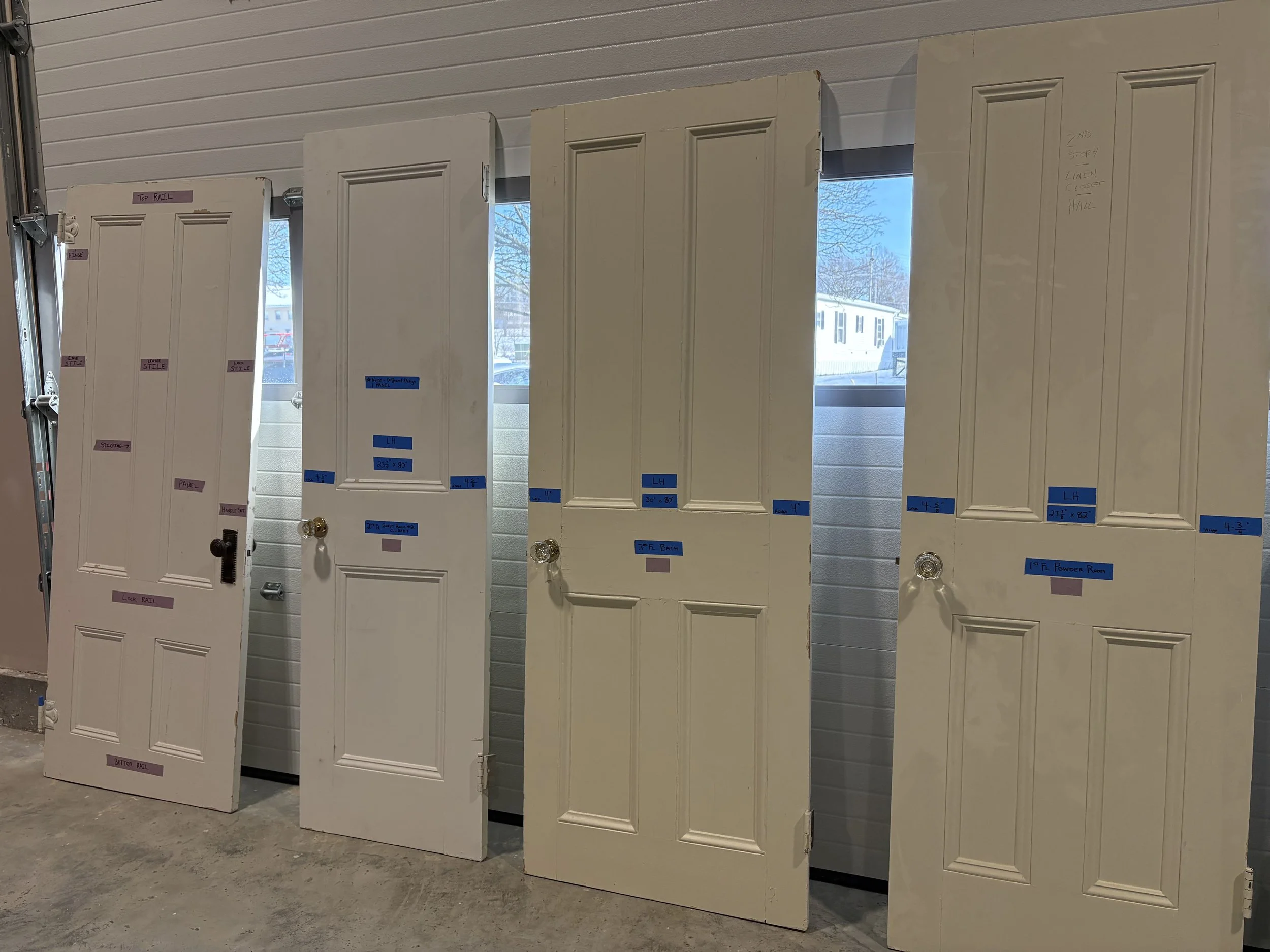
An array of historic doors from a recent job site.
Key Considerations
• Size: Historic doors rarely match modern standards. Minor trimming is normal; major resizing adds cost.
• Condition: Loose joints or cracked panels may make reuse impractical.
• Frame: Reusing the existing jamb is usually the most economical option.
• Swing & Lock: Changing the swing or lock location adds labor.
• Wall Thickness: Modern walls are often thicker, requiring jamb extensions or custom work.
Pros and Cons
Pros:
• Preserves original character
• Often made from high‑quality old‑growth wood
• Can be cost‑effective in the right conditions
Cons:
• Labor‑intensive
• Size and swing limitations
• Easy to over‑modify without a plan
Skill Level
DIY: Possible only when the door and frame stay together and the swing does not change.
Carpenter: A good carpenter with clear direction can usually handle the work.
Handyman: Often not equipped with the tools or experience required.
Historic Door Specialist: Best for valuable doors or complex changes.
Price Ranges (Very Rough Estimates)
• Door and frame moved together with no changes: $500–$1,500 per door
• Reuse with modifications: $1,500 per door and up
• New historic‑style wood doors: $1,000–$1,500 and up (door only)
All pricing depends on region, condition, and scope.
DIY Time Expectations
Plan 1–2 full days per door for relocation.
This does not include new casing, finish trim, painting, or refinishing.
How to Plan for Success
The single best tactic is to measure and plan before removing any doors.
• Measure every door and label it
• Measure frames or rough openings
• Create a simple door schedule
• Let the doors you’re reusing inform the remodel
Measure first. Plan second. Remove last.
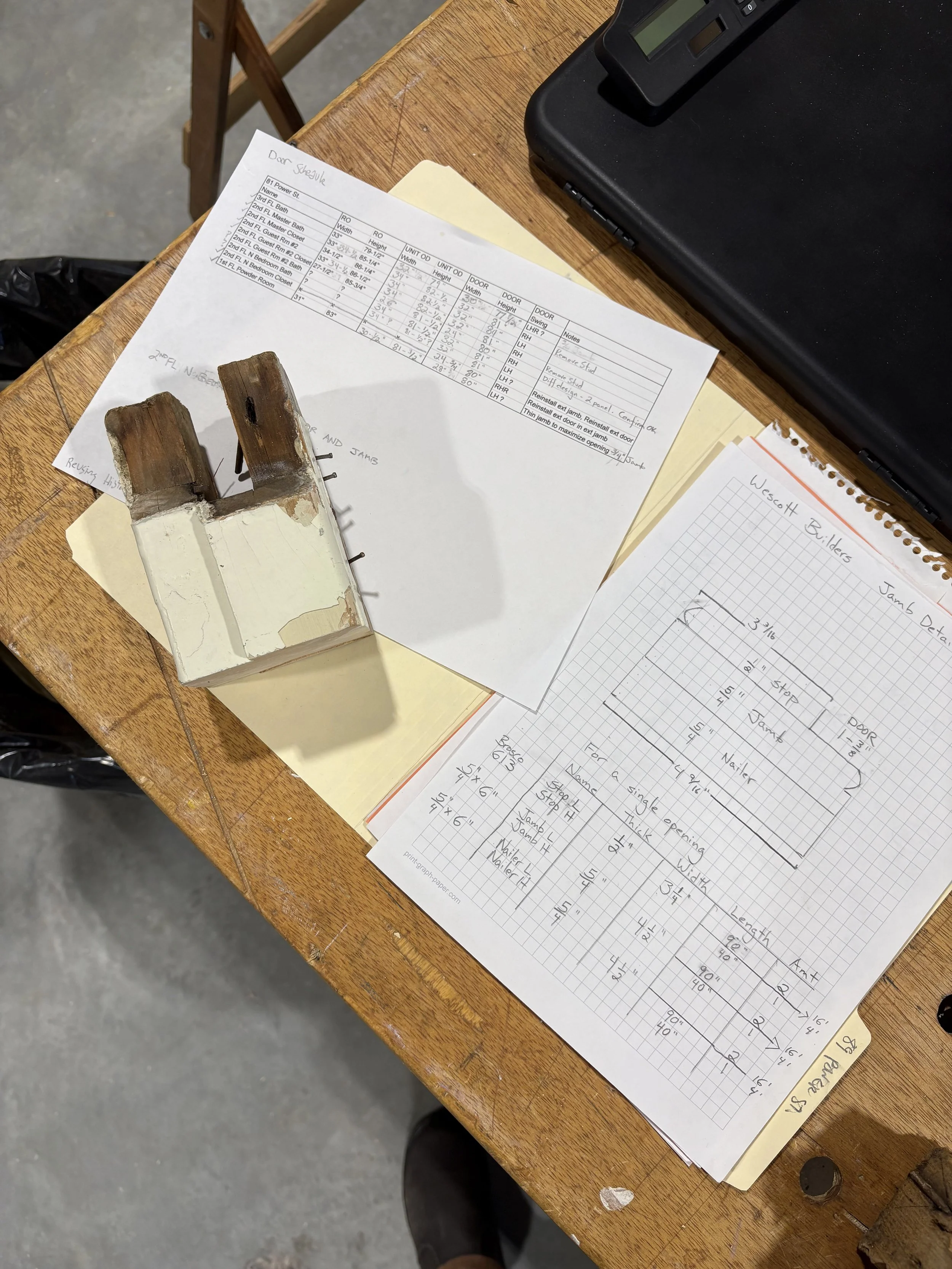
How we organized our door measurements.
