Stopping Water Intrusion with Style
A Bronze Threshold Solution
Location: Back Bay, Boston, Massachusetts
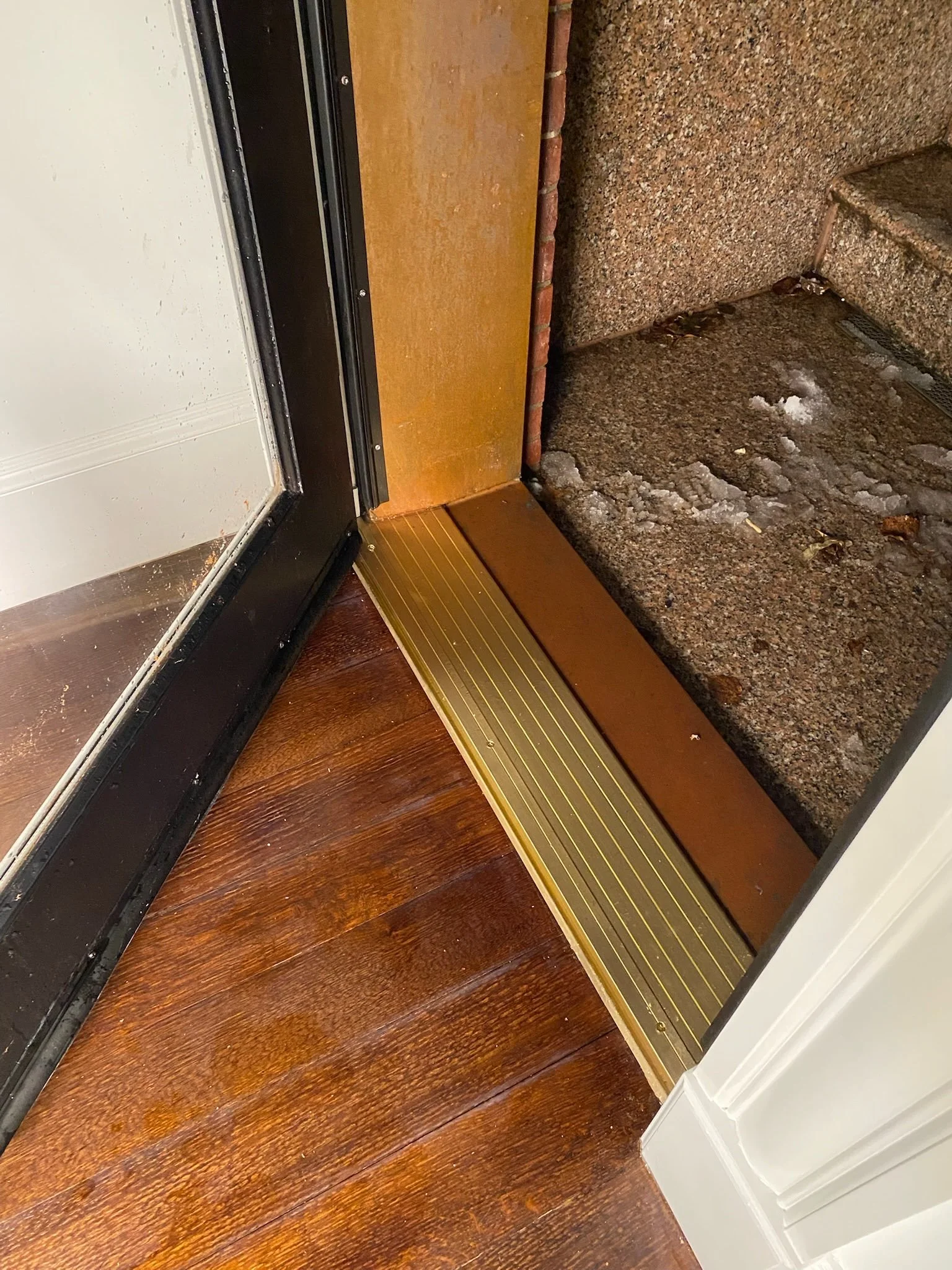
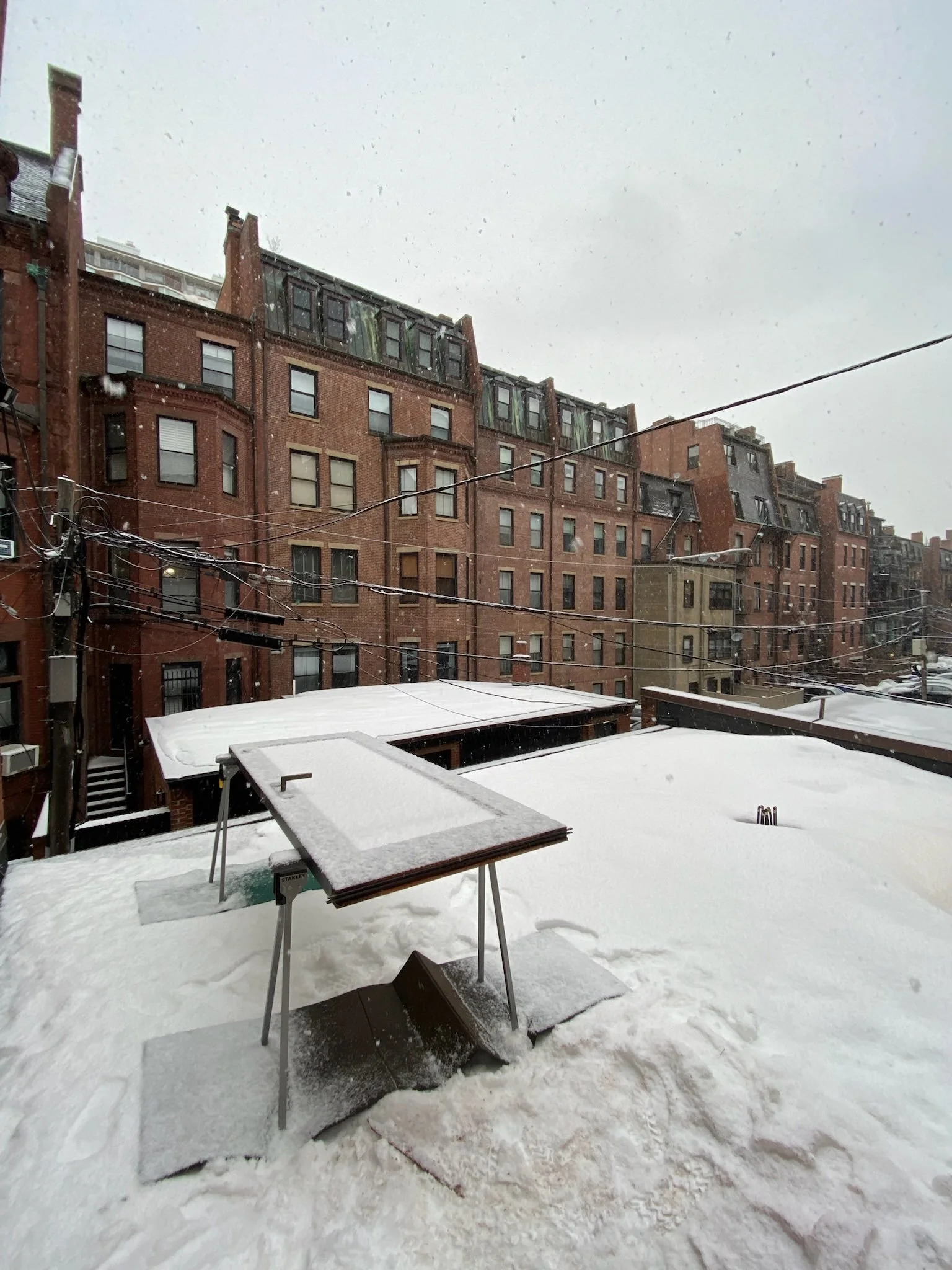
A third-floor exterior door opened directly onto a roof deck with no overhang. During heavy rain, water was entering the home and running down inside the walls.
Several attempts had already been made to address the issue. An exterior door sweep had been added, custom copper flashing was installed at the sill, and additional weatherstripping was placed at the bottom corners of the door. These improvements helped, but the door still leaked during heavy rain.
Classic Door was asked to evaluate the problem and propose a permanent solution.
Understanding the Leak
Rain hitting a door surface produces more water than most people realize. On a typical 3' × 7' door, a large volume of water runs down the face of the door during a storm, concentrating at the bottom.
Wind-driven rain, pressure differences between exterior and interior, and the natural clearance required for a swinging door all create opportunities for water to enter.
In this case, water appeared to be collecting along the smooth copper sill flashing and working its way beneath the bottom weather seal, particularly at the bottom corners. Wind pressure and capillary action likely accelerated the intrusion.
The issue was not simply a failed seal. It was standing water at the sill.
Project Design
Classic Door met with the builder on site to review the conditions and discuss potential solutions.
A bronze threshold was proposed to manage water at the sill rather than relying solely on compression seals. The builder reviewed threshold samples and selected a model that met both functional and aesthetic requirements.
A clear installation plan and scope of work were prepared. The builder ultimately requested that Classic Door’s in-house team perform the installation.
Installation
Installation began with aligning the door and checking hinge fasteners to ensure the door was properly positioned in the frame. Perimeter weatherstripping was confirmed to be functioning correctly.
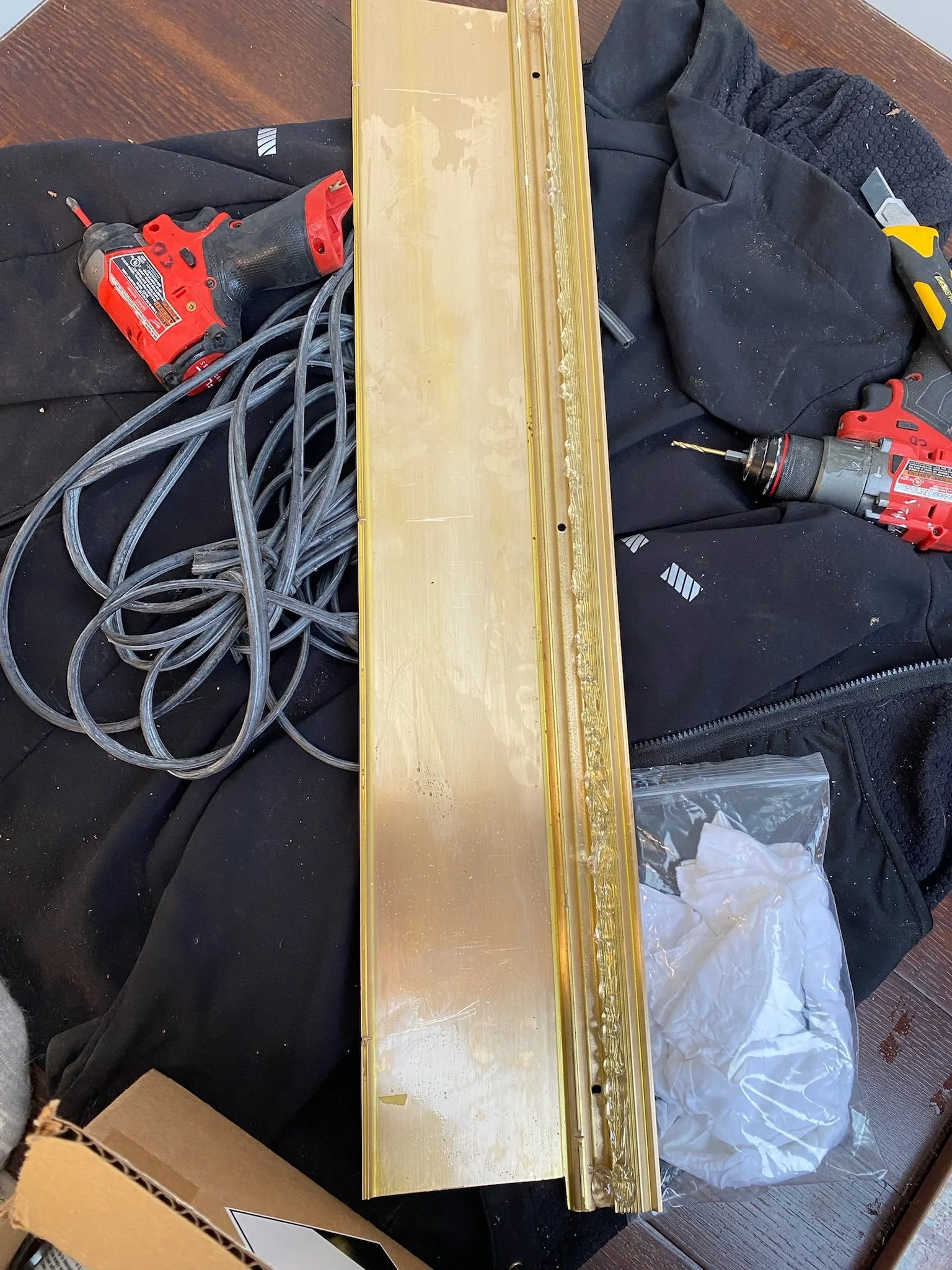
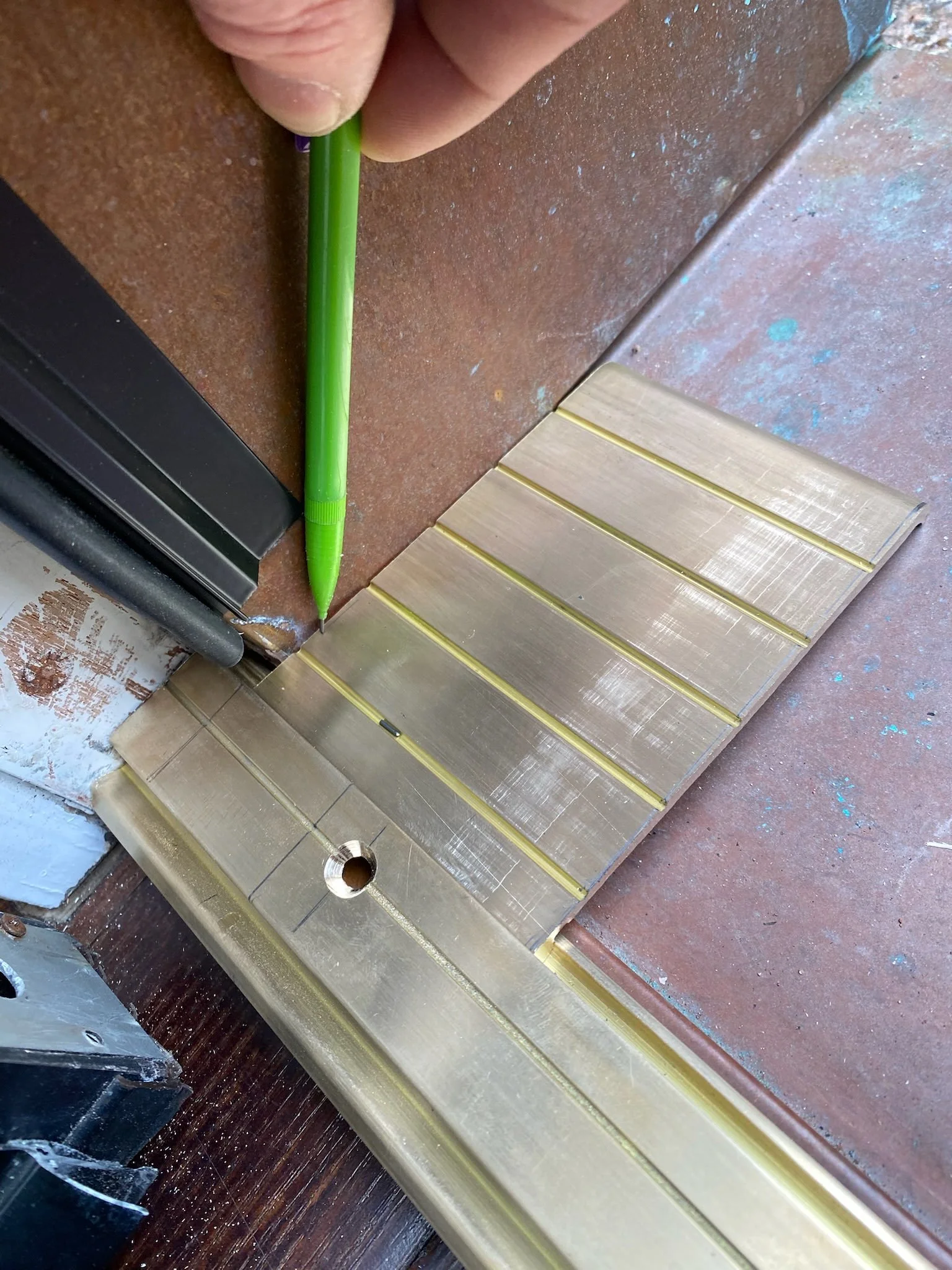
A template was created at the sill using thin plywood strips and hot glue to capture the exact shape of the opening. The bronze threshold was then cut to match the template and prepared with drainage weep holes.
Because a copper flashing pan already existed beneath the sill, the threshold was bonded using a high-quality elastomeric sealant rather than mechanical fasteners in order to avoid penetrating the flashing.
Door Modification
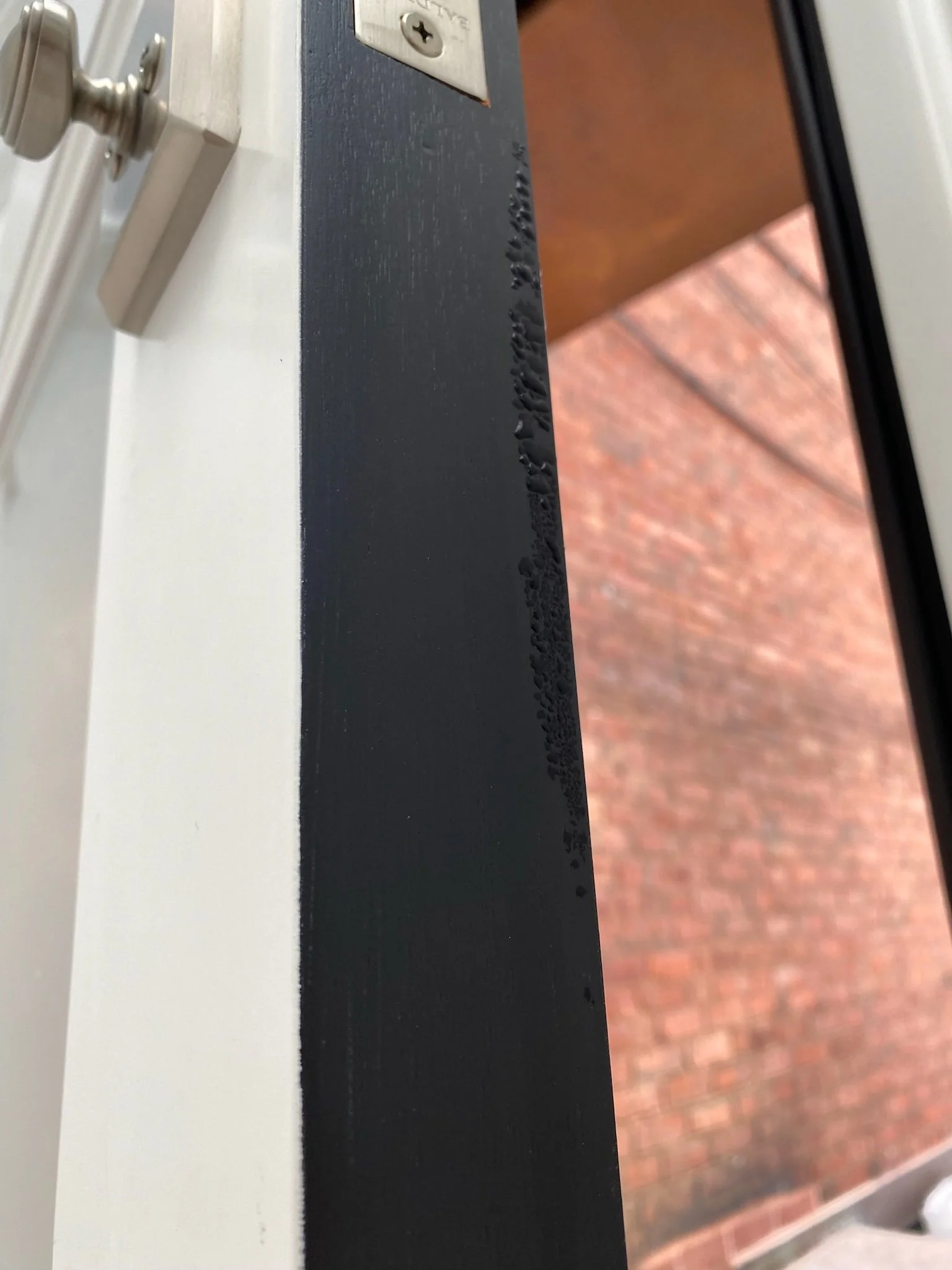
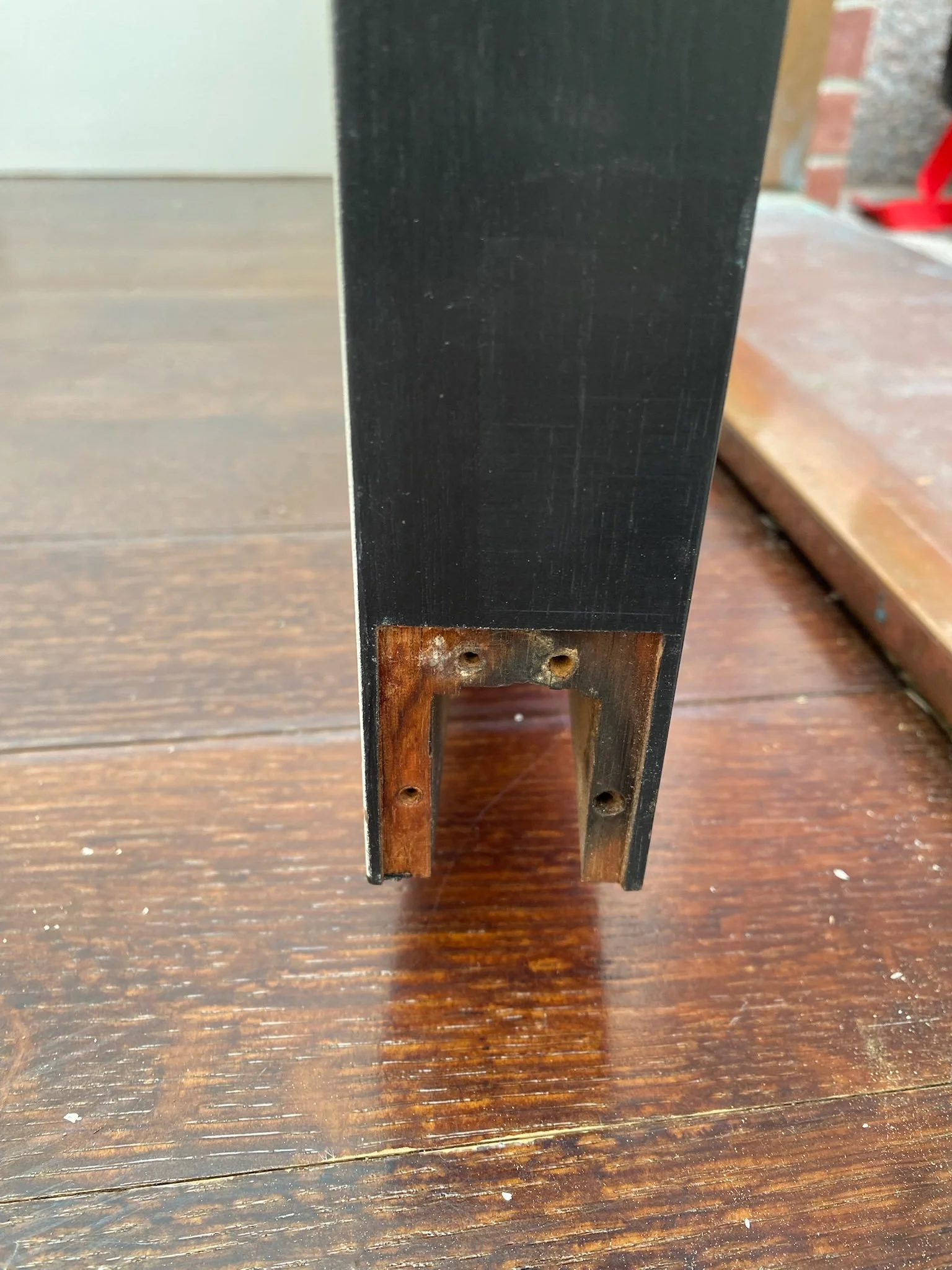
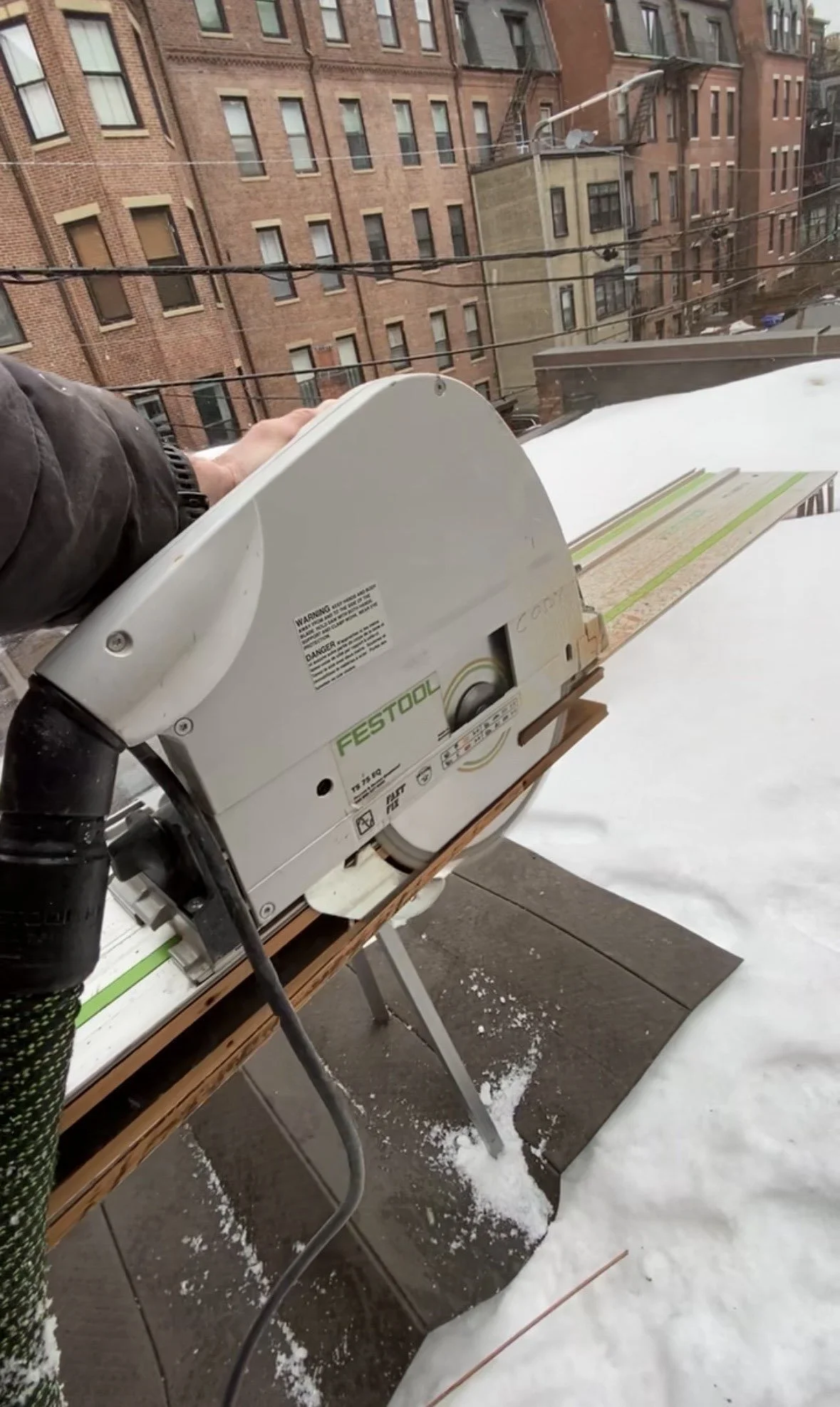
The new threshold increased the effective sill height by approximately ½ inch. The door was removed and trimmed to maintain proper clearance.
The cut bottom edge of the door was sealed with epoxy, and grooves were added to accept a replaceable silicone door sweep. This sweep provides a controlled compression seal and can be replaced without removing the door.
Final Testing
Rain conditions were simulated using a garden hose on shower mode from several feet away. The goal was to replicate natural rainfall rather than force water into the assembly.
Observers inside monitored for any signs of intrusion along the bottom of the door while water ran down the exterior face.
Testing confirmed the threshold system effectively managed water at the sill.
Result
The bronze threshold introduced several improvements:
• increased sill height
• milled surface lines that break surface tension
• an interior gutter that captures water
• weep holes that drain water back to the exterior
Combined with the sealed door bottom and silicone sweep, the new assembly manages water rather than relying solely on compression weatherstripping.
The water intrusion was resolved